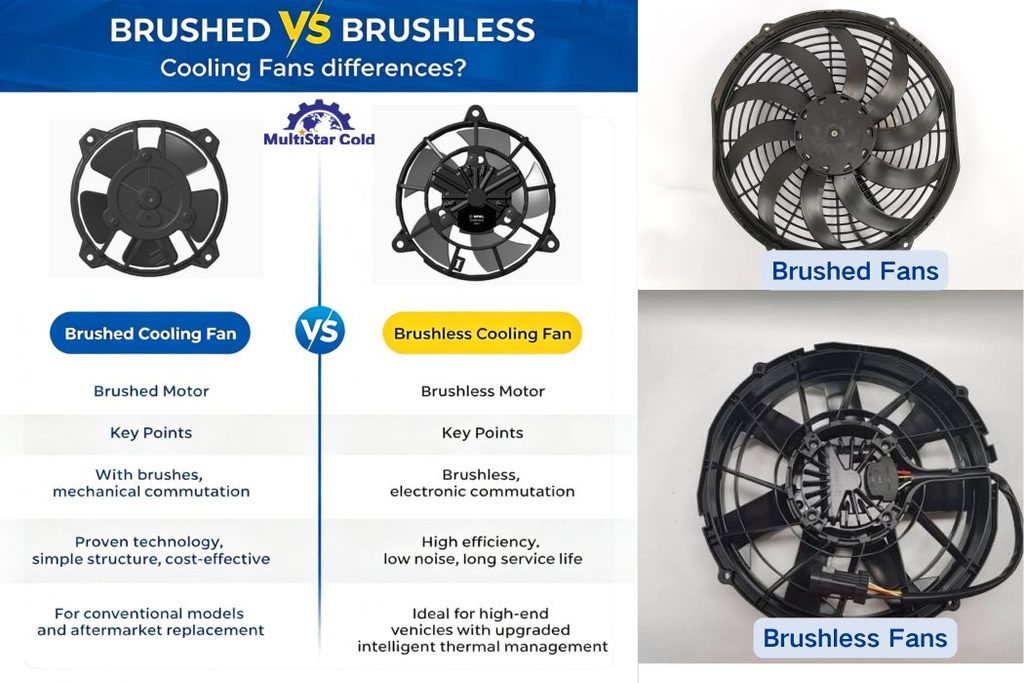
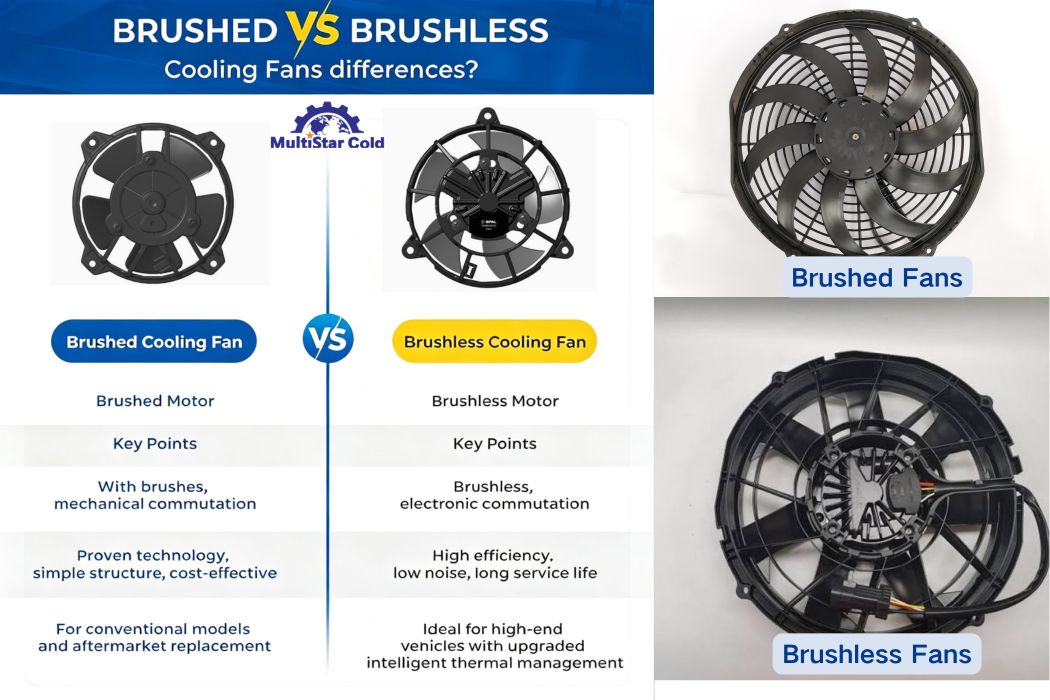
Operators and maintenance teams for passenger buses often face a common question: when it comes to condenser fans for bus air conditioning systems, should you pick brushed or brushless models? The two types may look nearly identical from the outside, but their internal structure, service life and overall operating costs differ greatly. Making the right choice can cut your fleet’s maintenance time and spare parts expenses.

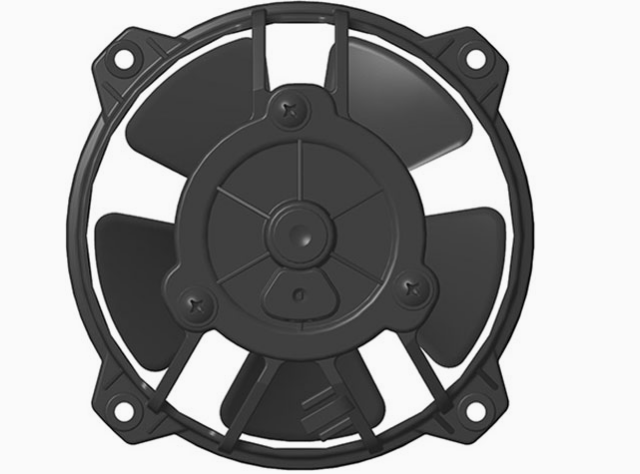
Brushed fans are the traditional, widely used bus AC cooling option. They rely on carbon brushes for commutation. Their main benefits are lower upfront cost, simple wiring, great compatibility with older bus AC systems, and easy on-site repair with readily available replacement parts. However, carbon brushes are consumable components.
After long hours of high-speed operation, they gradually wear out, which can lead to abnormal noise, unstable rotation speed and carbon dust buildup. They have a relatively short service life and require regular inspection and brush replacement, especially for long-distance coaches running frequent routes. They work best for low-budget fleets, older vehicle replacements and buses with low daily operation hours.
Brushless fans are now the mainstream choice for new energy buses, premium coaches and refrigerated transport conversions. Without carbon brushes, they use an internal driver board for electronic commutation. They deliver quieter operation, lower power consumption, stable cooling performance, and no brush wear issues. Their service life is 2–3 times longer than brushed fans with far fewer breakdowns. They support precise PWM speed regulation for smoother, more consistent air conditioning temperature control. Although the initial purchase price is higher, they reduce unexpected downtime and frequent part replacements in the long run. They are ideal for long-haul passenger buses, tour coaches and high-utilization fleets, lowering the risk of AC failure mid-journey.
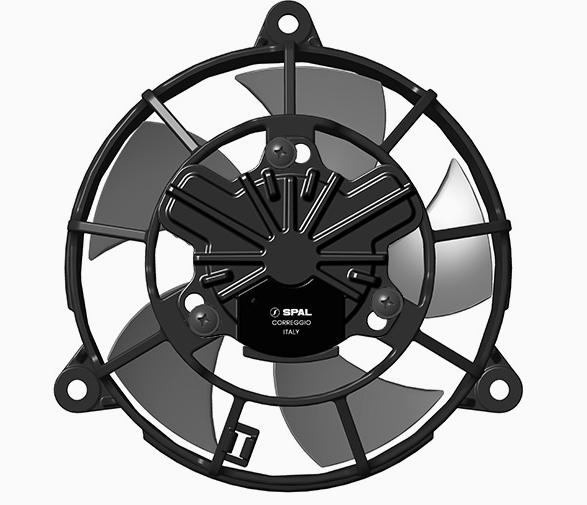
One important note: it is hard to tell them apart just by the outer housing and fan guard. The key differences lie inside the motor and wiring connectors. Brushless fans usually come with multi-core control cables, while brushed versions mostly have simple 2-wire positive/negative connections. When replacing bus condenser fans, do not rely only on appearance. Always verify motor type, voltage and airflow direction to guarantee compatibility with your AC controller.
Quick takeaway: Choose brushed fans for budget-friendly replacement on older vehicles. Go for brushless fans if you prioritize long-term reliability, less maintenance, energy savings and quiet performance for your core operating fleet.